

The planning of physical space today is based on a wide range of separate disciplines, from architecture and landscape architecture to transportation, infrastructure, and drainage engineering. The professional separation between these fields, a relatively recent phenomenon, begins already in academic training, which does not encourage cross-disciplinary integration in planning. As things stand today, planners’ narrow perspective limits their responsibility to specific spatial segments, often resulting in spatial disruptions and disconnections in urban environments precisely where connections are most needed.
One of the most prominent expressions of this phenomenon occurs in mountainous cities, where disciplinary planning boundaries create a binary, level-based separation between different spatial uses. This separation often manifests as excessive retaining walls at points of contact between uses (for example, between a residential building and the sidewalk and road alongside it). The prevalence of retaining walls in mountainous cities has unintentionally turned them into a central physical feature—monolithic and impermeable—that reinforces boundaries and disconnections in the urban fabric. For this reason, retaining walls can be seen as a wasted spatial resource, born out of a narrow engineering need that has spiraled out of control. This raises the question: how can construction in mountainous cities be planned to encourage a connected, walkable urban fabric rather than fragmentation and physical barriers?
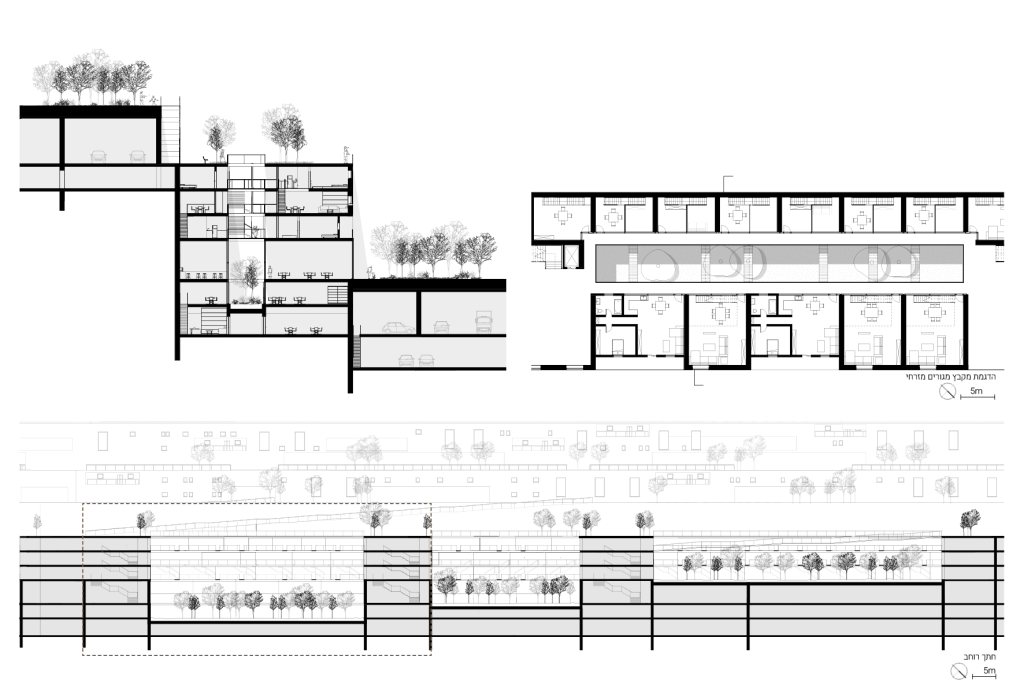
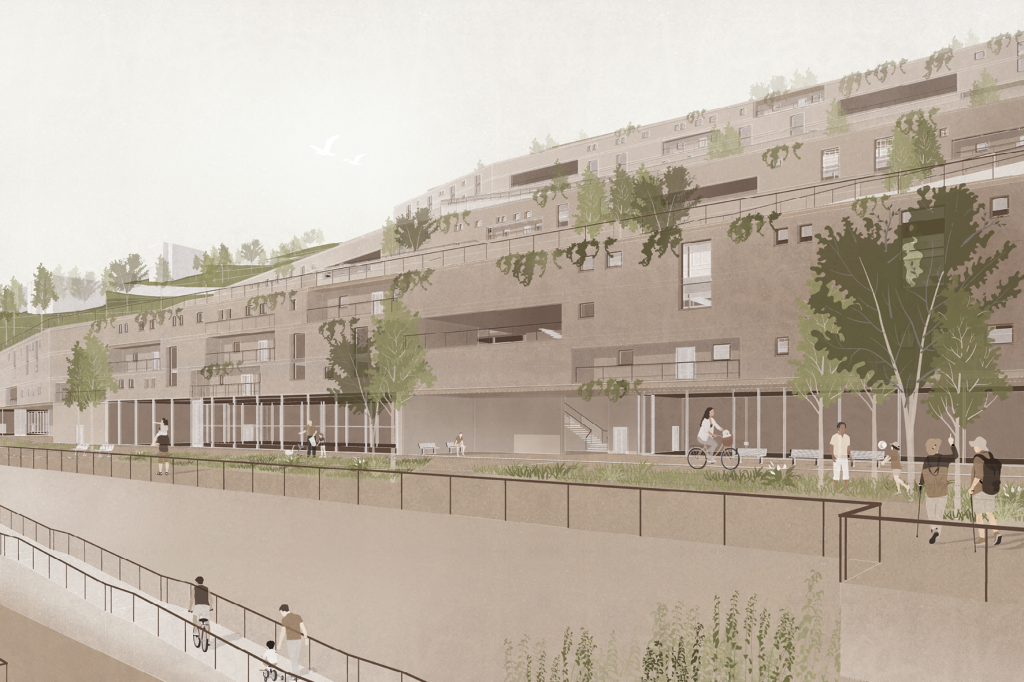
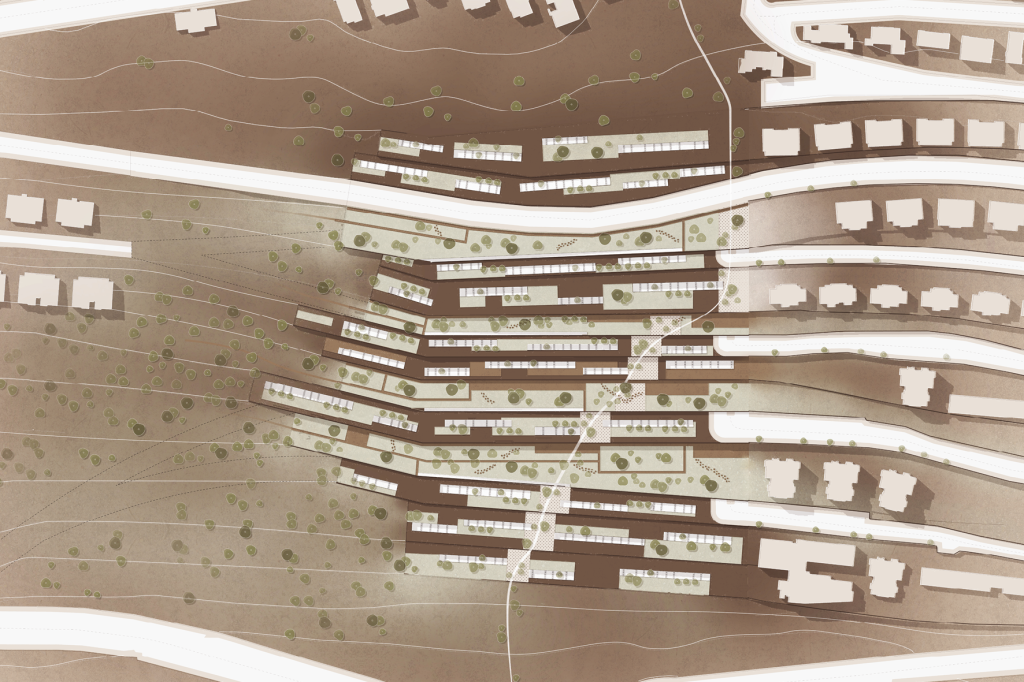
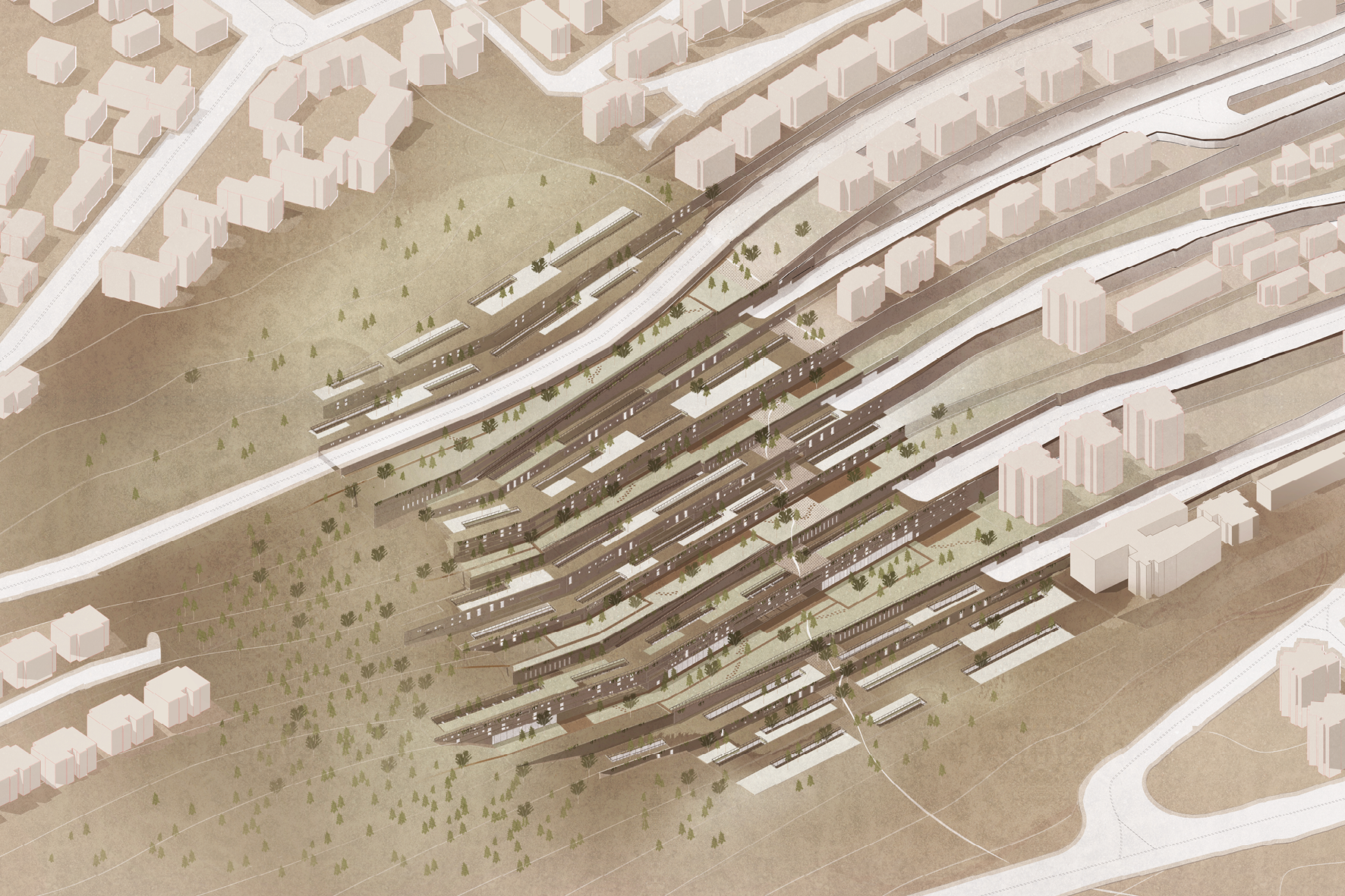
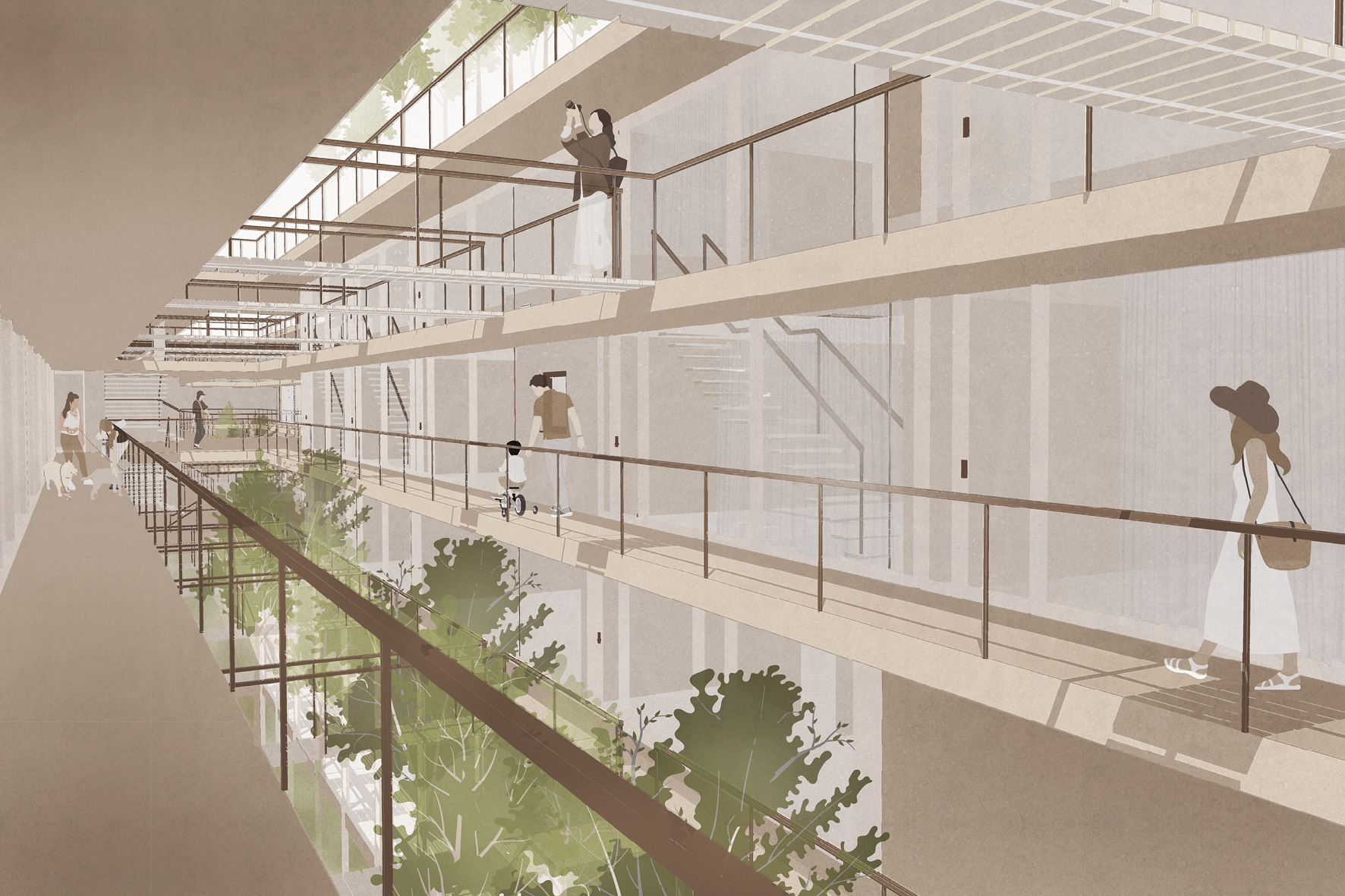
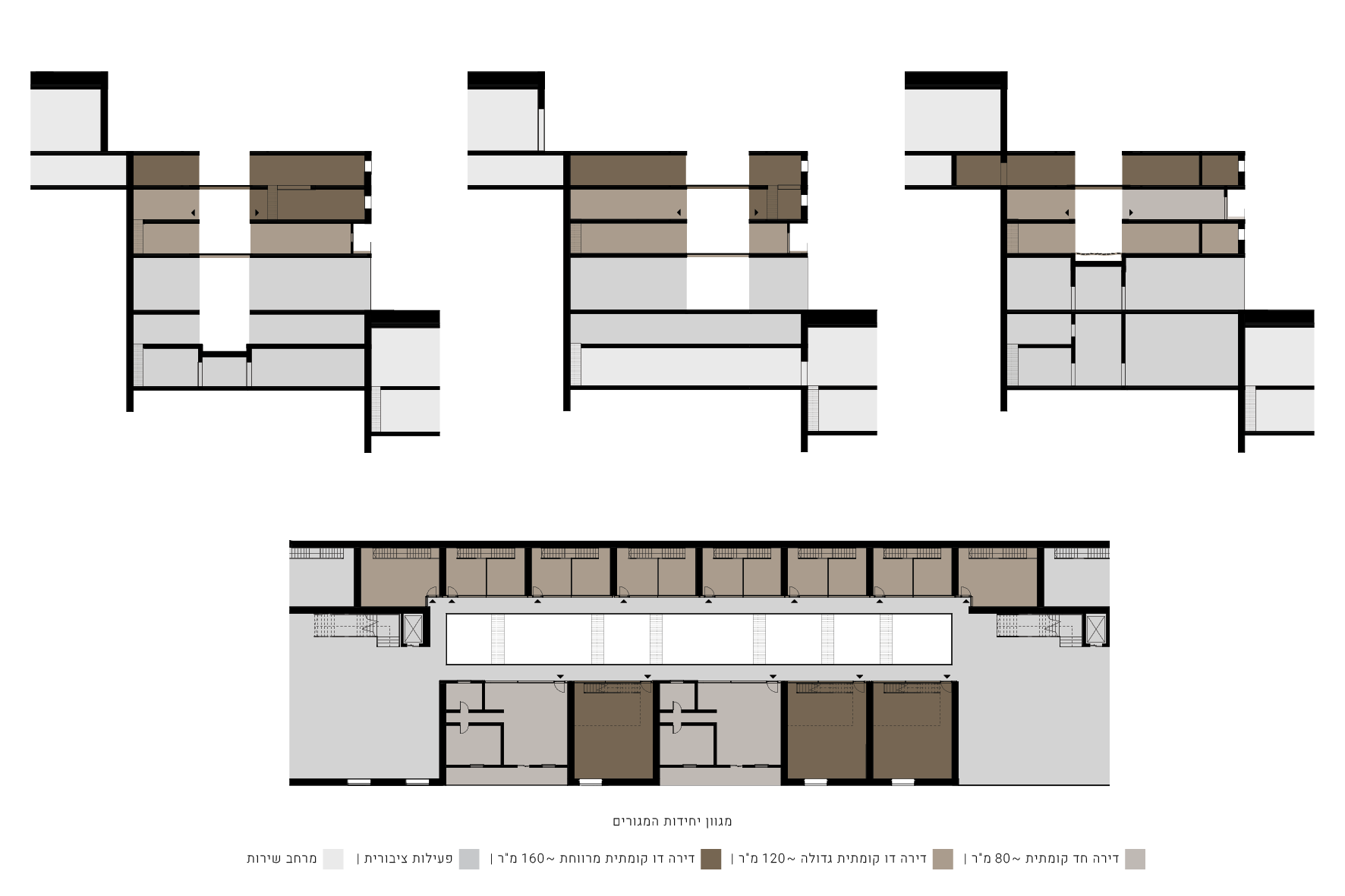
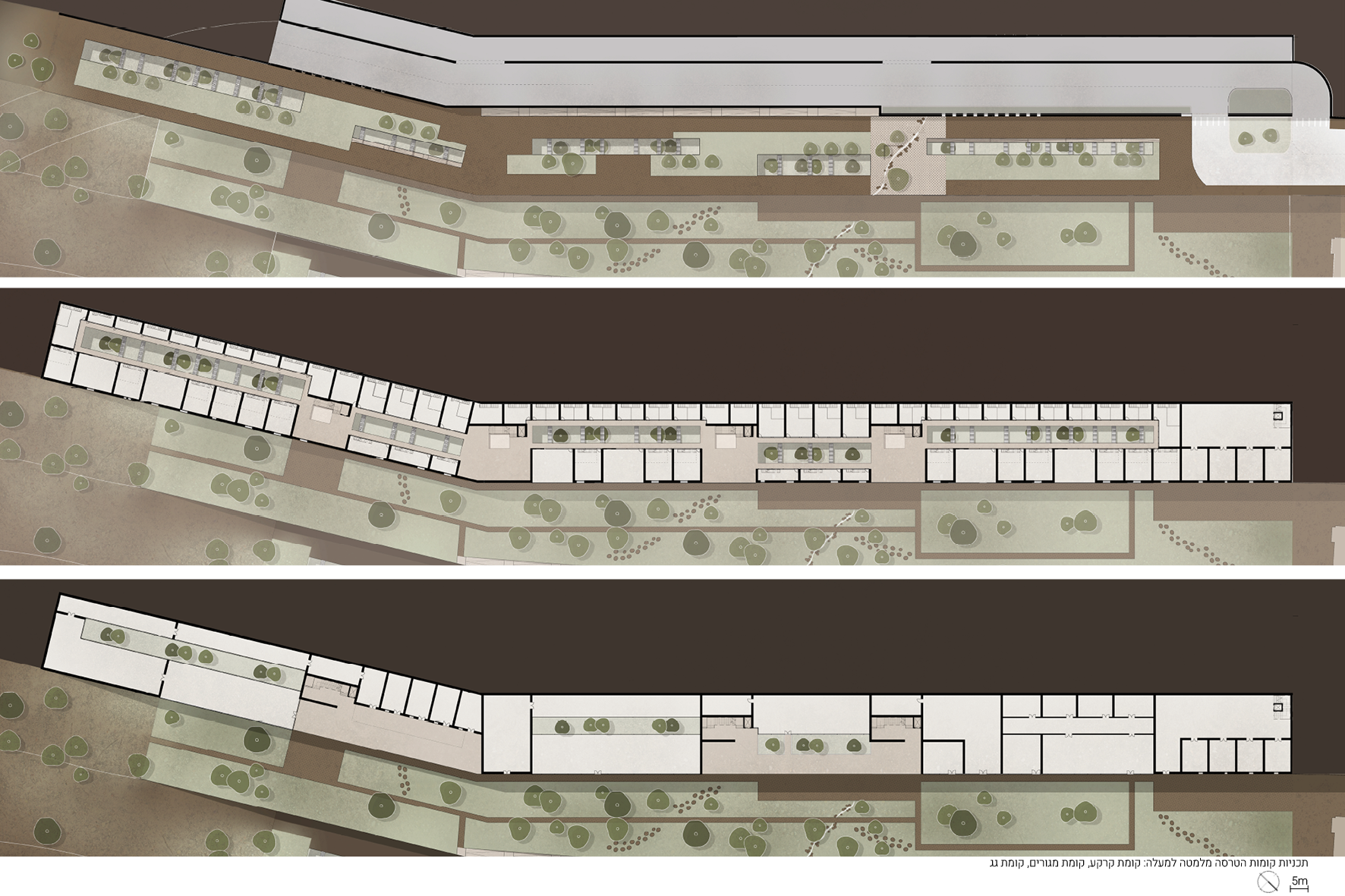
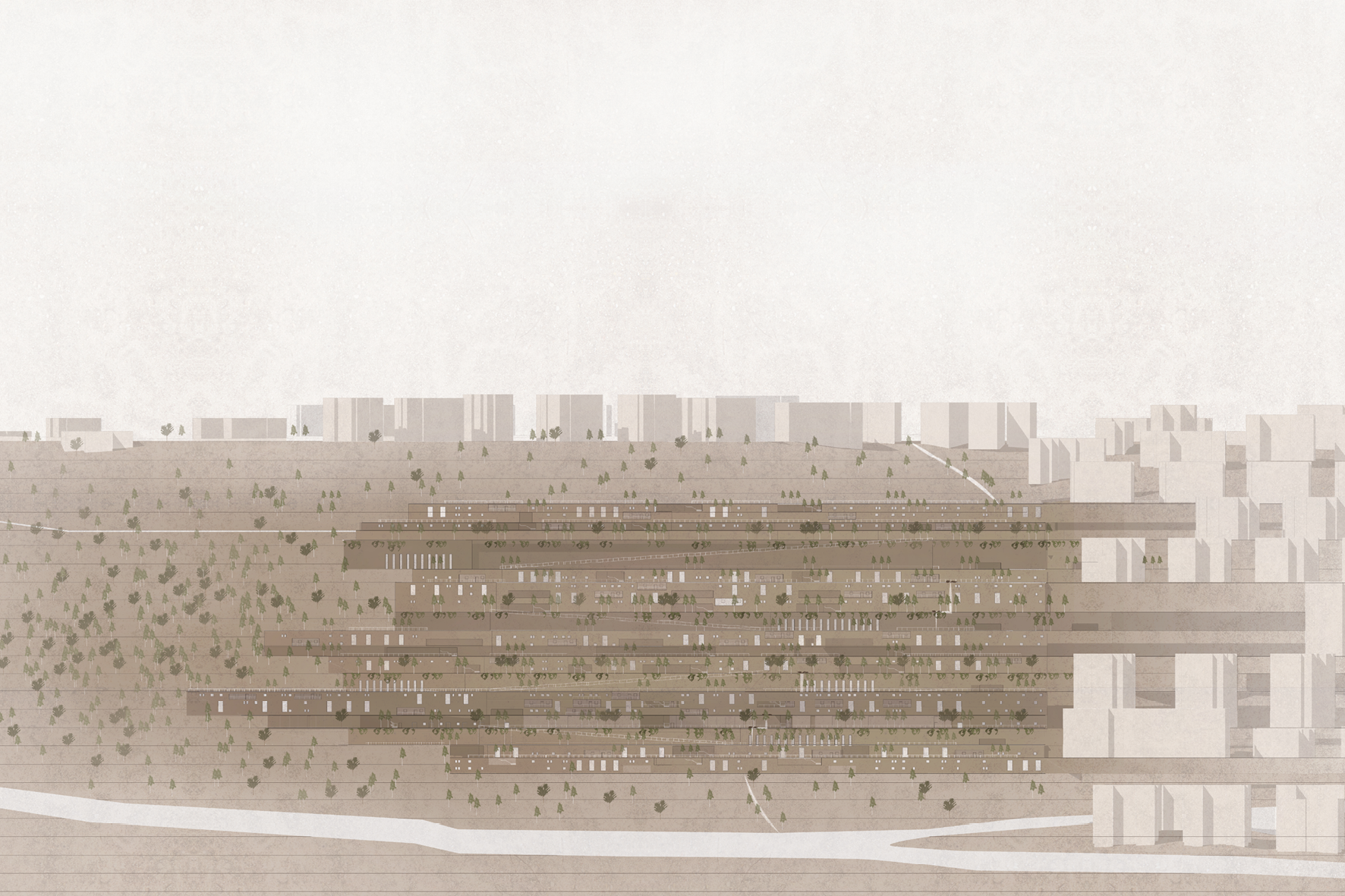
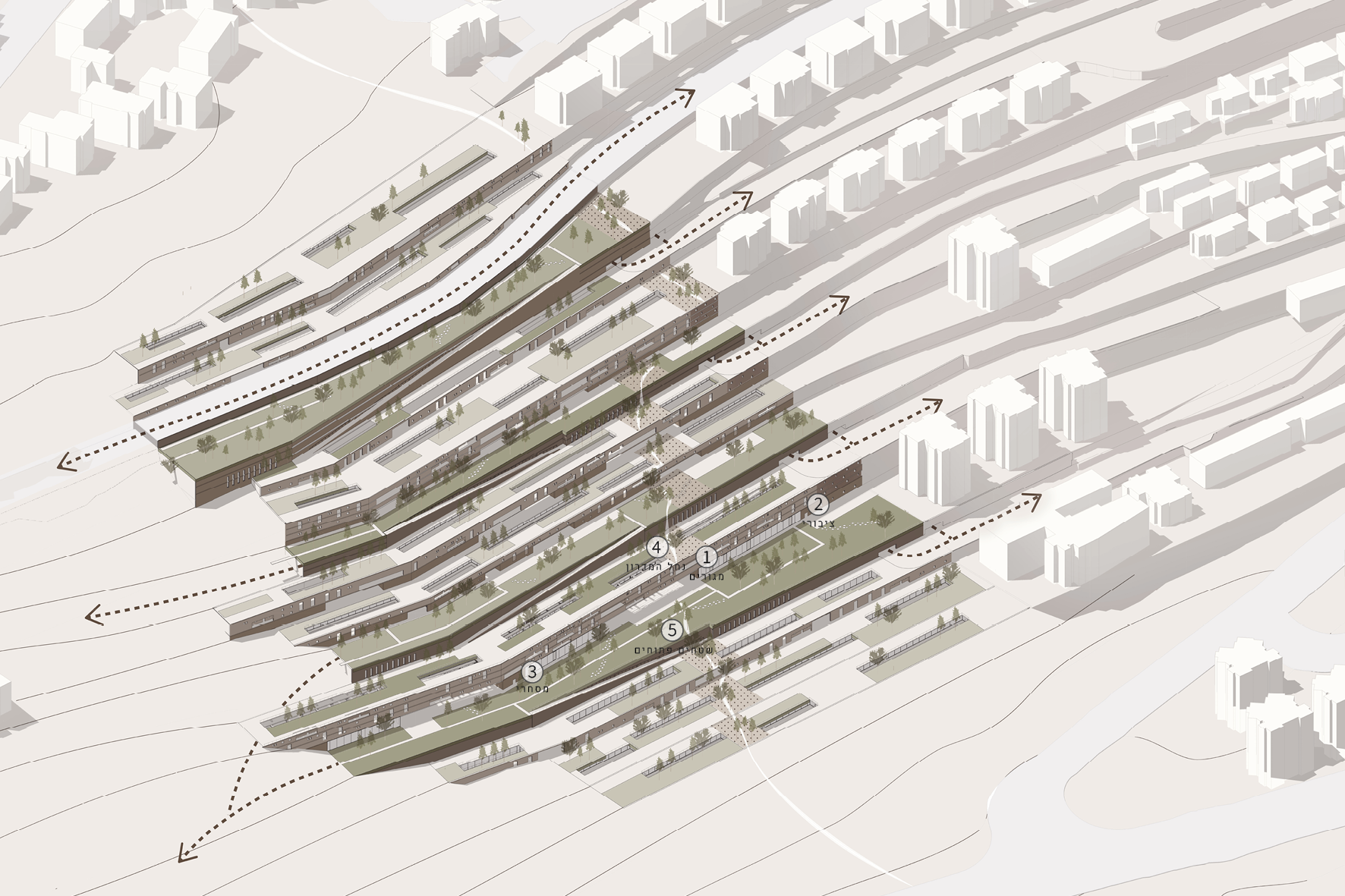
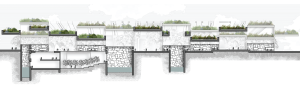
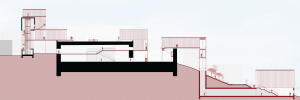
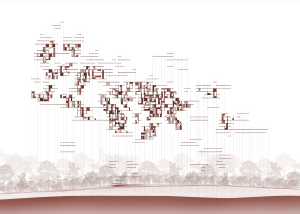
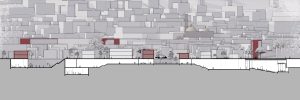
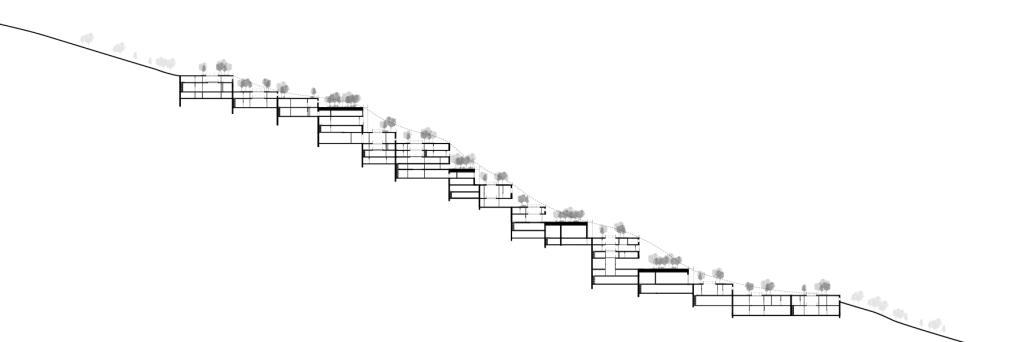
Retaining walls are situated at a critical interface between land, infrastructure, and construction. Nevertheless, they have remained solution-focused, focusing solely on the engineering aspect of soil support required by the new design. The intervention strategy I propose treats height differences as a planning advantage, enabling the creation of a “supportive space” of functional, multi-purpose volumes rather than a retaining wall. At the neighborhood scale, planning supportive spaces transforms the slope on which a neighborhood is built into a continuous fabric, where movement follows the topographical differences rather than resisting them. This strategy was implemented on the slopes of the Neve Sha’anan neighborhood in Haifa, in an open, strategic area currently trapped between residential streets, which could serve both to expand the neighborhood and strengthen its spatial cohesion.