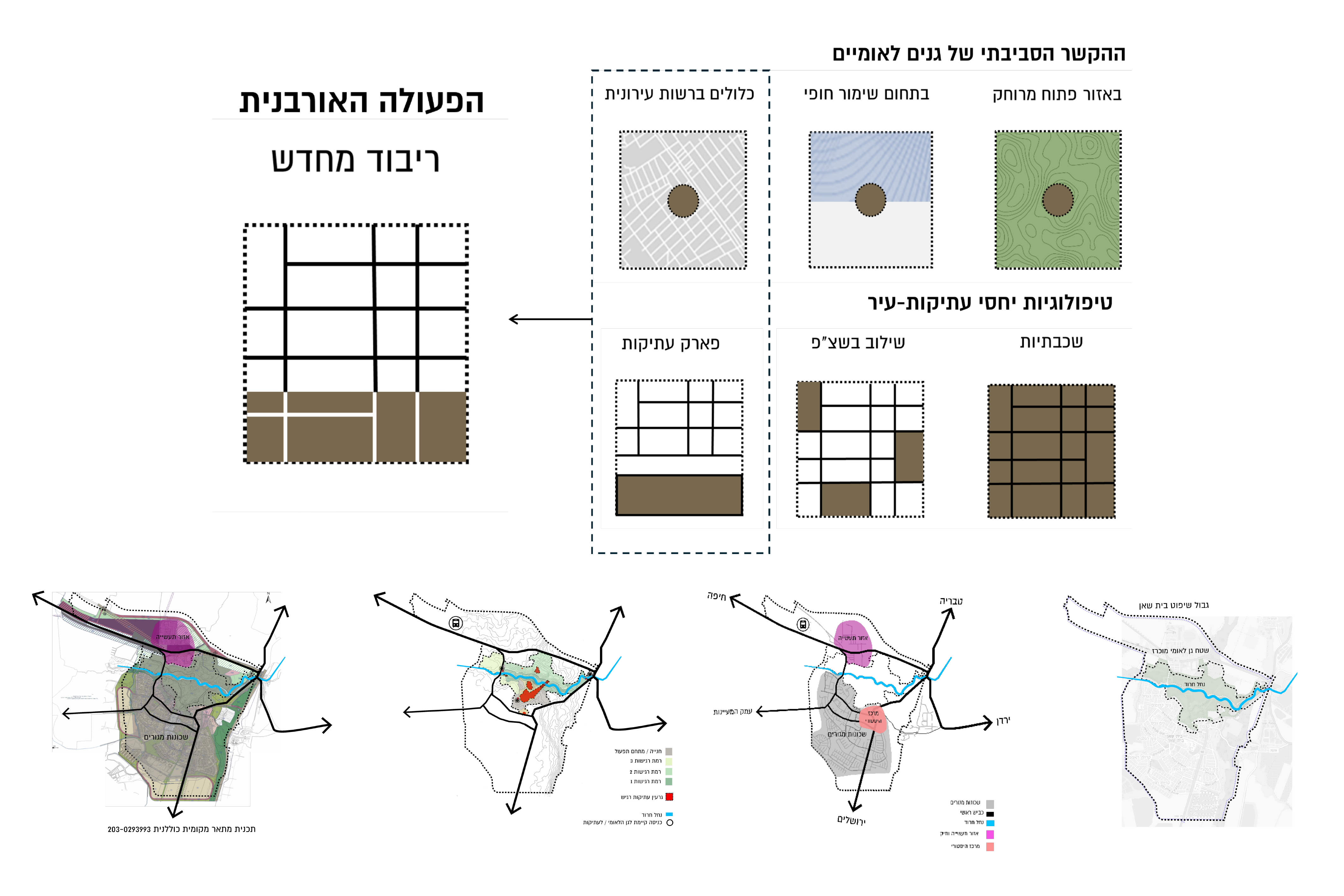


Across shifting eras and under changing influences, Beit She’an / Scythopolis / Beisan stood as a monumental and dynamic city, set against the evocative landscapes of Emek HaMaayanot. Like many ancient sites around the world, its ruins have an enchanting appeal that attracts many visitors. Yet here, visitors tend to come and go without ever engaging with the life of the contemporary city. This disconnect is not unique; in Israel, national parks and archaeological sites often become “voids” within peripheral urban fabrics and development is .occurring in isolation from heritage sites and the natural landscapes
The project views the designation of “National Park” not as a neutral land-use category, but as one charged with cultural and social values. Rather than treating it as a boundary, it frames it as an opportunity: a means to strengthen local identity, to serve as an economic engine, and to cultivate urban vibrancy.
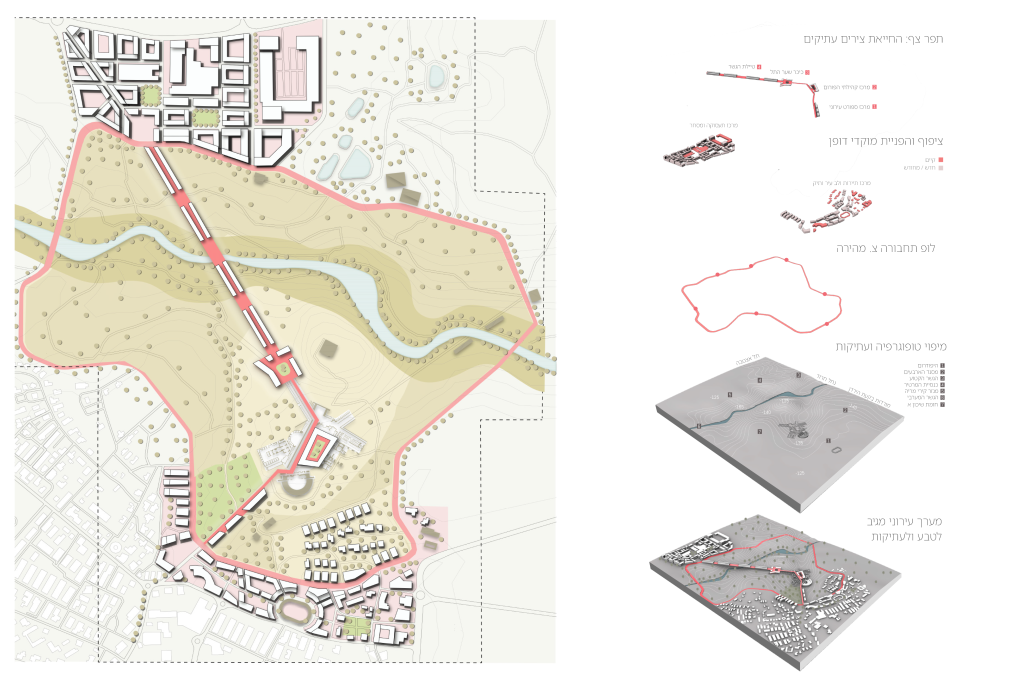
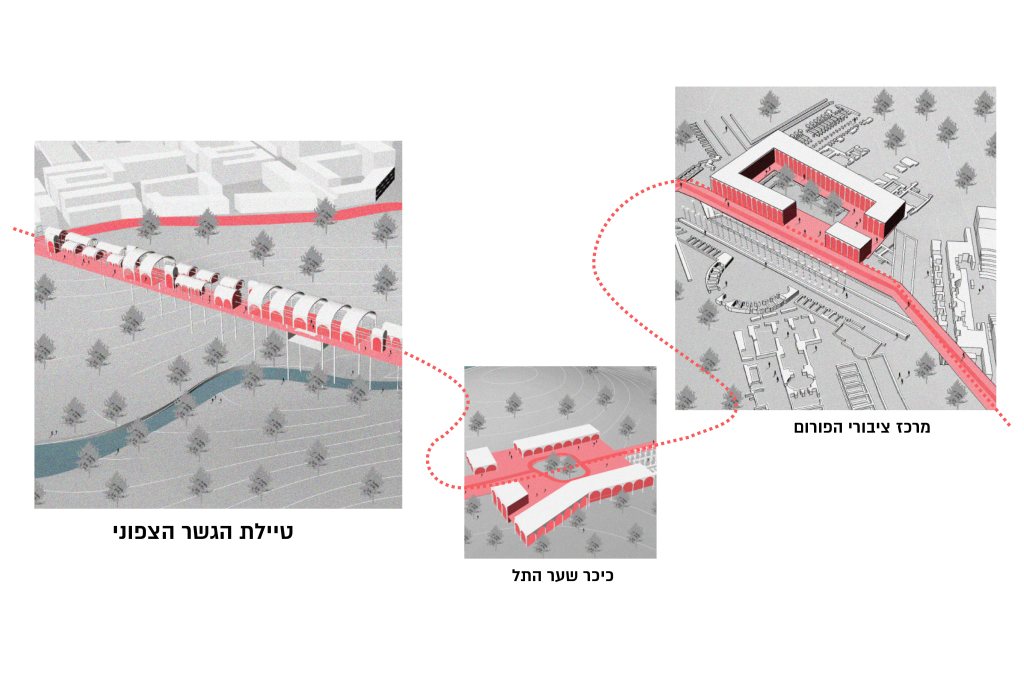
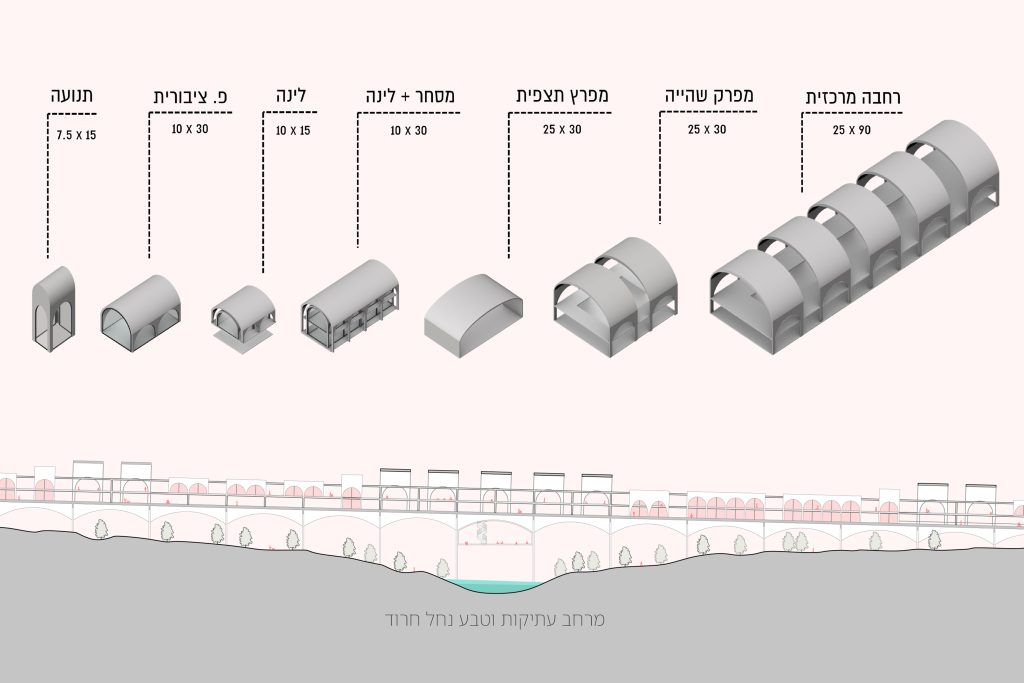
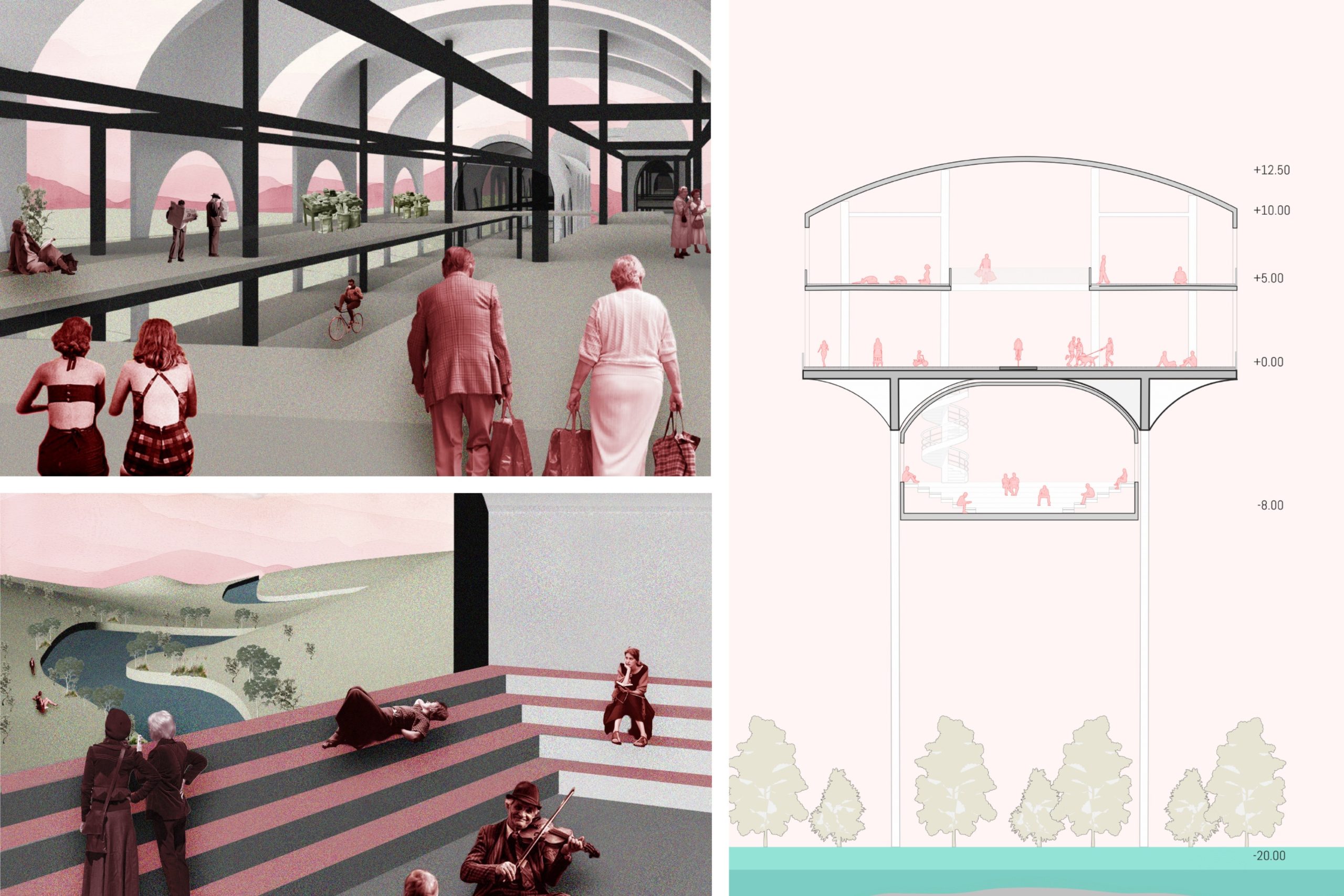
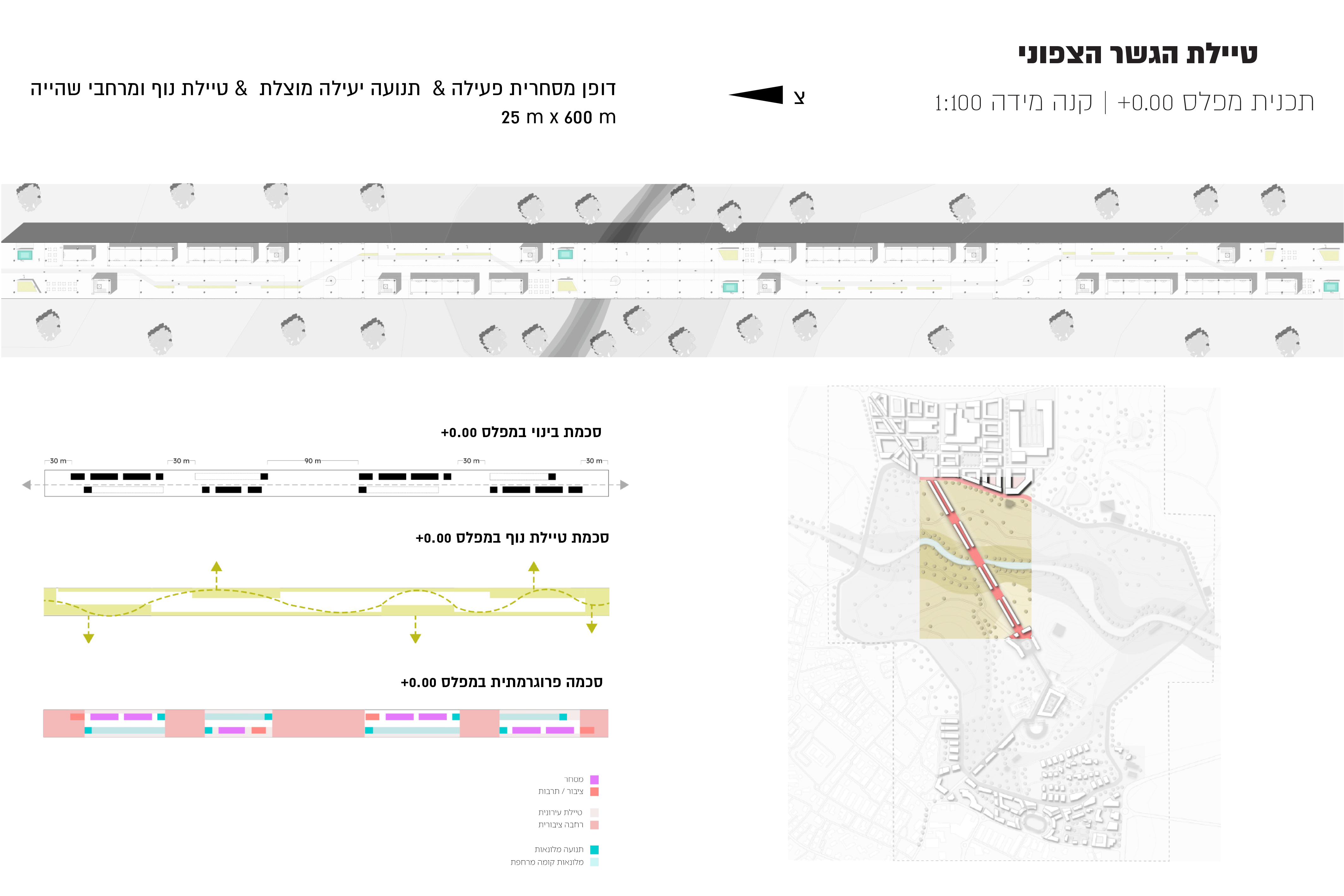
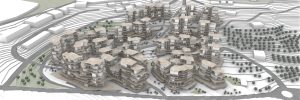
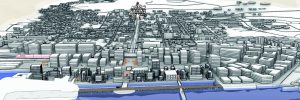
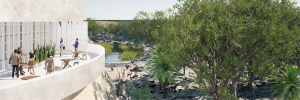
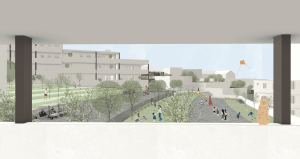
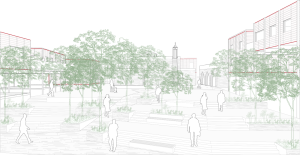
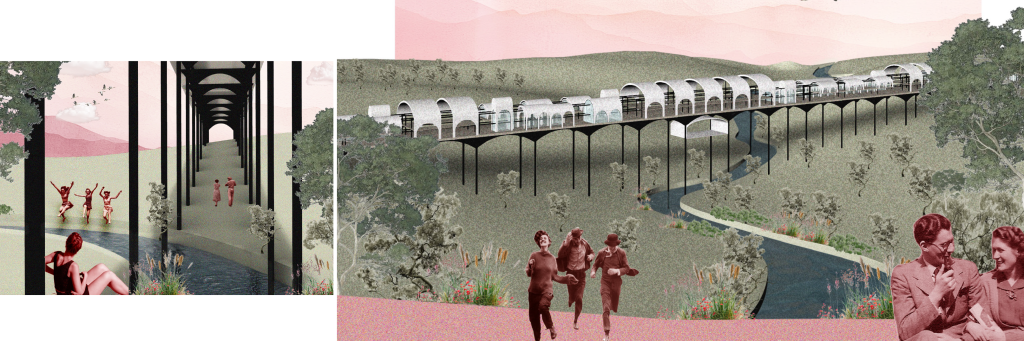
Through two complementary interventions, the project reimagines the relationship between modern Beit She’an and its ancient fragments, guided by principles of sustainable cultural heritage conservation. At the urban scale, the city’s northern employment hub and its historic southern core are densified, restructured, and reoriented toward the trace of the wall that once surrounded the ancient city. At the architectural scale, the project revives the Roman streets by weaving them into a lively walkway that spans Nahal Harod. This elevated seam conceptually reconstructs the essence of the ancient city, facilitating daily movement and commercial activity, while also accommodating hospitality, tourism, and leisure spaces suspended between the natural and archaeological landscapes.