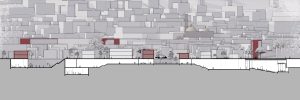



In an era where speed is perceived as a central value, many urban areas are planned primarily to serve intensive transportation flows. In Tel Aviv, the Ayalon Stream corridor—today dominated by highways and railway tracks—stands out as an extreme example of a fast urban area, saturated with noise, movement, and spatial separation. Within this context arises the question: can such an area offer an alternative possibility—an experience of slowness through walking, pausing, and lingering?
The project argues that slowness is not only a personal matter but a political–urban stance: an attempt to reclaim a place for people and community within environments governed by speed.
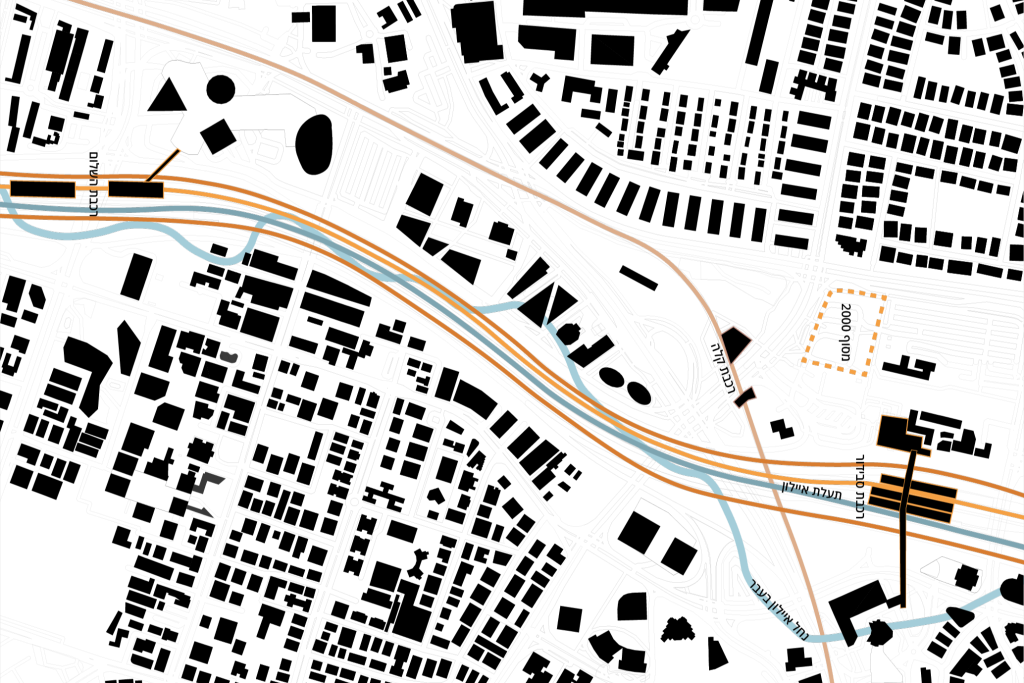
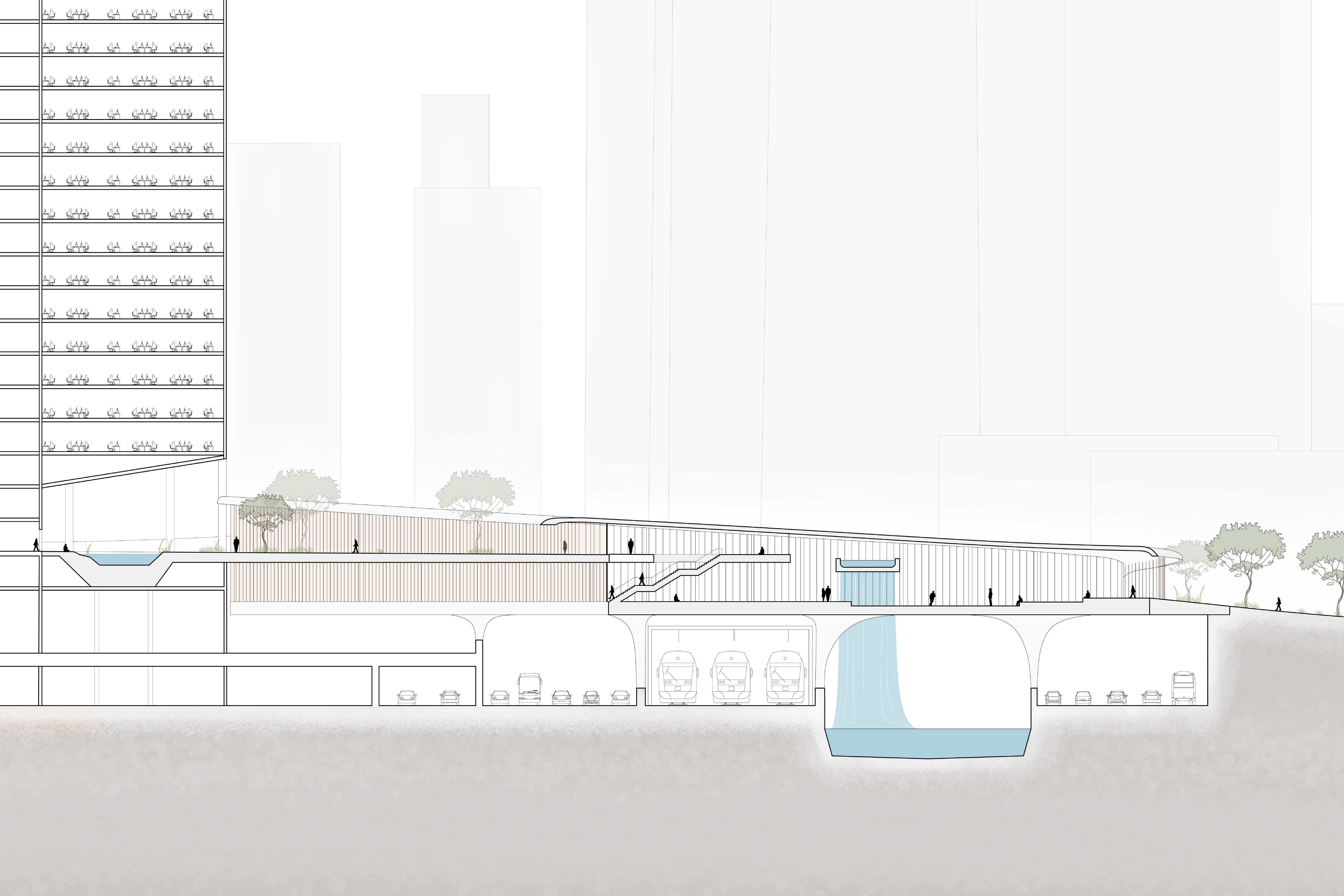
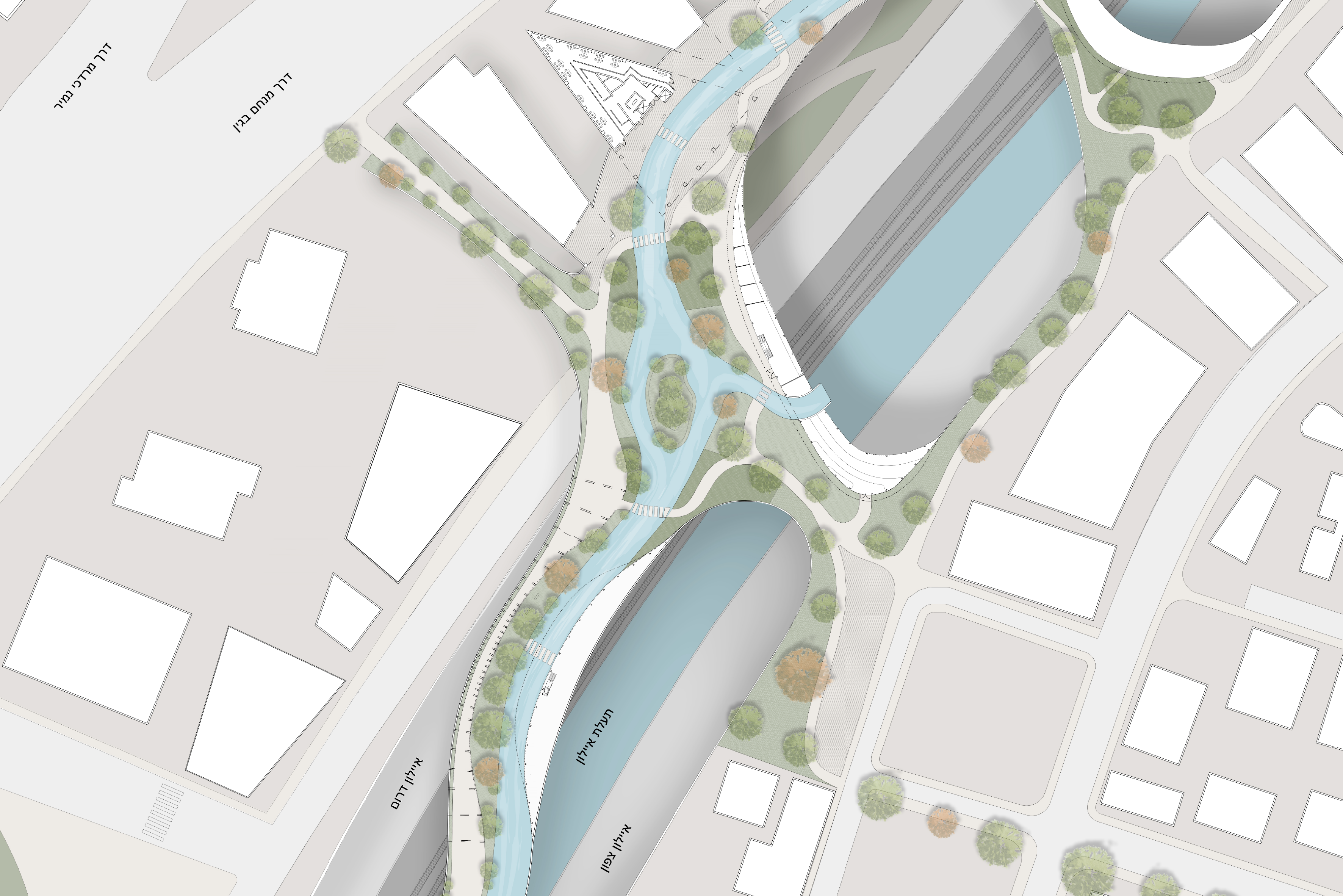
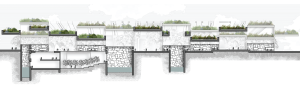
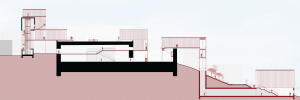
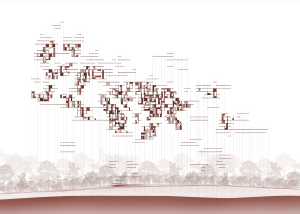
The chosen site—the seam between the Shalom and Savidor railway stations along the Ayalon Stream—embodies the tension between fast urban–transportation areas and the potential for other kinds of human experience. The proposal introduces a continuous elevated walkway above the infrastructure, accompanied by seasonal water flow, planting, and shading, to create a slow and calm spatial layer within the fast area.
The architectural interventions include folding edge-walls that conceal and soften the transportation infrastructures while creating spaces for leisure, rest, and inward focus, alongside selective openings toward the flows of cars and trains. These views frame speed as a backdrop, positioning slowness as a relative experience that gains meaning precisely through contrast.
Thus, a fast and polarized urban area becomes one that also accommodates another rhythm—slow, human, and connective—offering a model for future interventions in other transportation–urban seams across Israel.