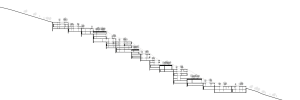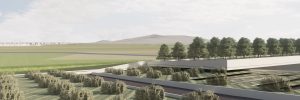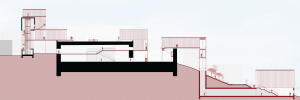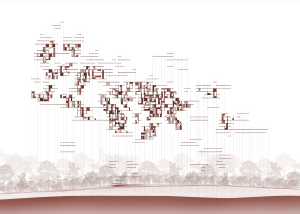


The urban space is a product of the constant expansion of the built-up area, which often comes at the expense of agricultural lands adjacent to the city. Although these agricultural lands are not usually considered part of the city itself, their presence on the city’s outskirts is integral to its identity and culture. Their physical disappearance causes the cultural and economic connections through which the city interacted with the surrounding agricultural areas to be forgotten, and may contribute to a sense of alienation between city dwellers and the natural environment.
The erasure of Jaffa’s agricultural heritage, a city once known as the “City of Orchards,” is an example of this phenomenon. For over a hundred years, the orchards shaped the city’s economy, landscape, and social life, but today the remnants of the well houses and agricultural lands that surrounded the built-up city are almost absent from the space. However, it may be possible, through architectural means, to integrate a significant physical presence of the agricultural heritage into the contemporary urban fabric, thereby helping to revive the city’s agricultural aspects and expose layers that have been erased.
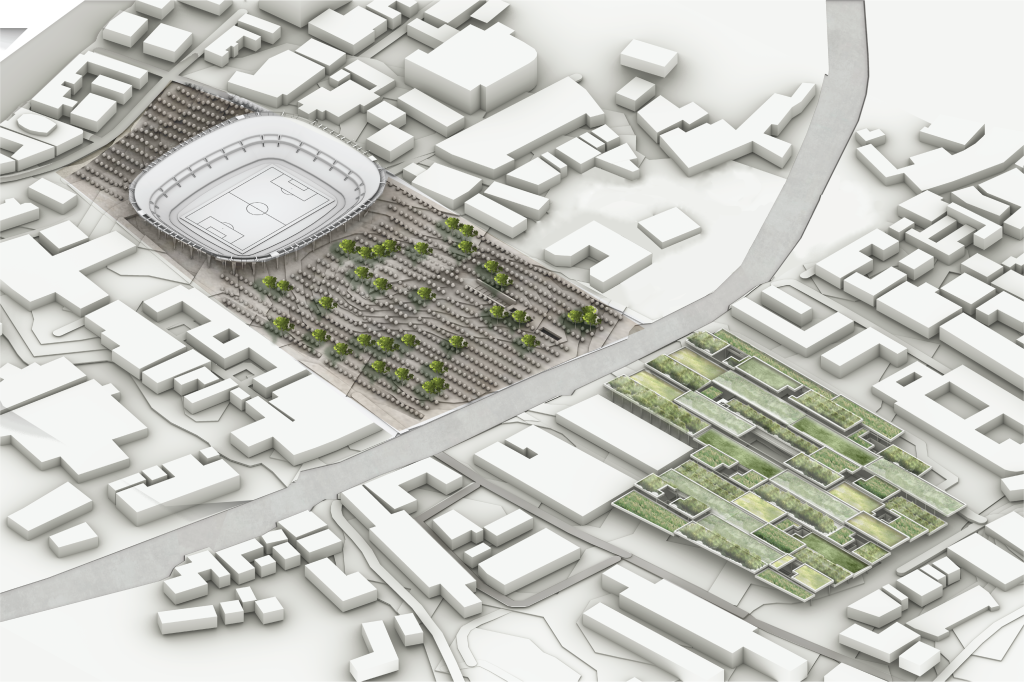
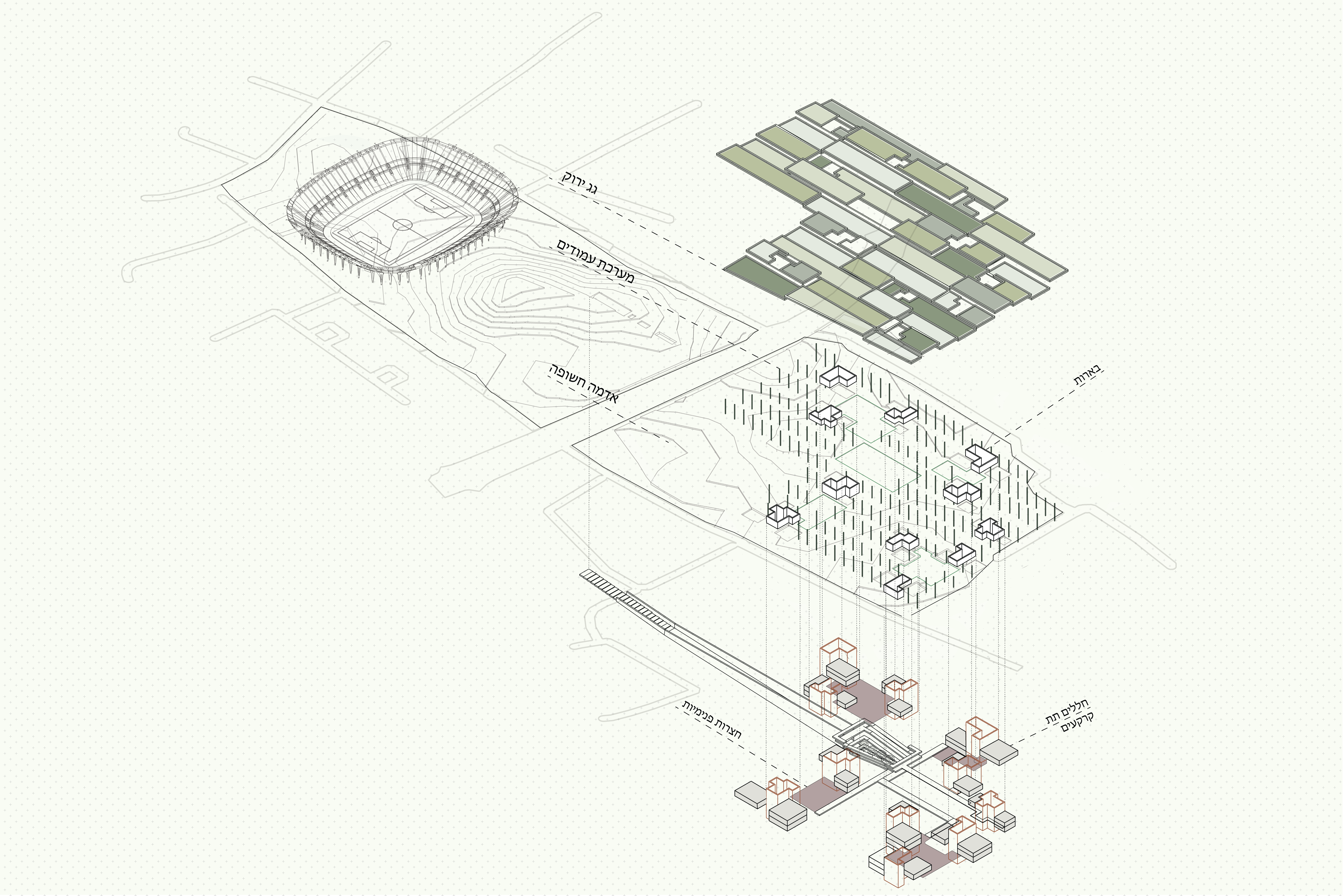
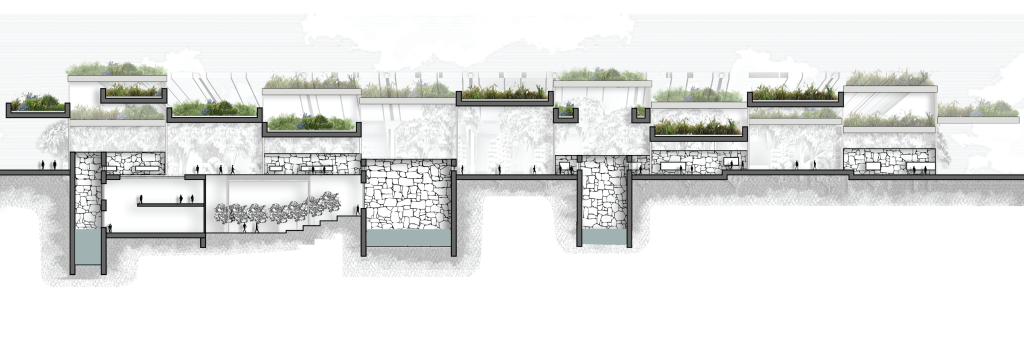
The project’s position is that it is not enough to settle for symbolic preservation or the placement of individual built objects that hint at the city’s agricultural past. Instead, an architectural-landscape intervention should be formulated to revive the connections between people, land, and water. In Jaffa, this is especially true around the well houses, which are usually the last physical evidence of the integrated agricultural, economic, and community system that was central to the city’s life. The chosen site is the Al-Basa swamp, which once served as a central water source for Jaffa’s orchards. Today, the swamp has been replaced by Bloomfield Stadium and the adjacent Groningen Garden. East of them is a large area of parking lots built on the site where orchards once stood.
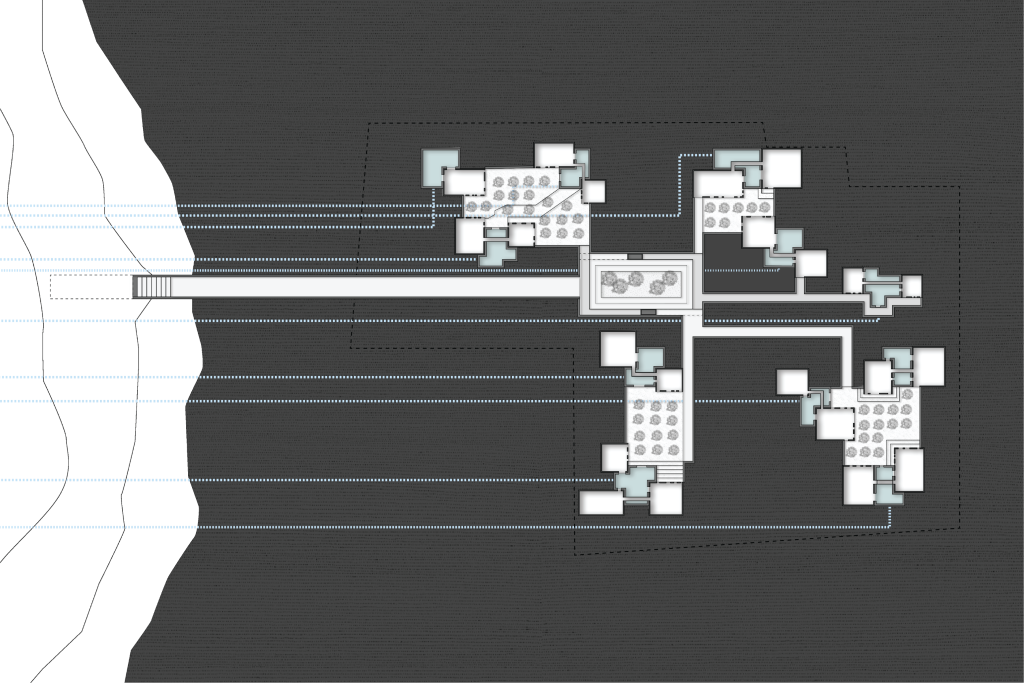
The project focuses on these two sites as a response to the erased history and the current situation. The architectural action uses two complementary languages: one is sensory-experiential, allowing for the experience of wandering and dwelling in an orchard; the second is formal-typological, grounded in the language of the linear orchard and the well houses as anchors. This combination creates a network of public-collaborative spaces that function as an “agricultural memory layer” within the city, challenging the status quo and offering a new model for integrating layers of the agricultural past into contemporary urban space.